Nip-Up Autopsy: Measuring Your Way Out of a Seized British Single
Photo: Viano Arcery, CC BY 4.0, via Wikimedia Commons
Nip-up is an old term for a very old disappointment: the piston picks up on the bore, the engine falters, and you coast to the verge with a hot smell and a sinking feeling. British singles are not fragile by nature, but they are honest about their needs. A long-stroke, air-cooled thumper with a cast piston and a carburettor is a machine that expects clearance, mixture, timing and oil to be roughly right. When one lets go in 2026, the cause is usually still one of those four, with modern E10 petrol added to the list of suspects.
Separate seizure from a fuelling fault
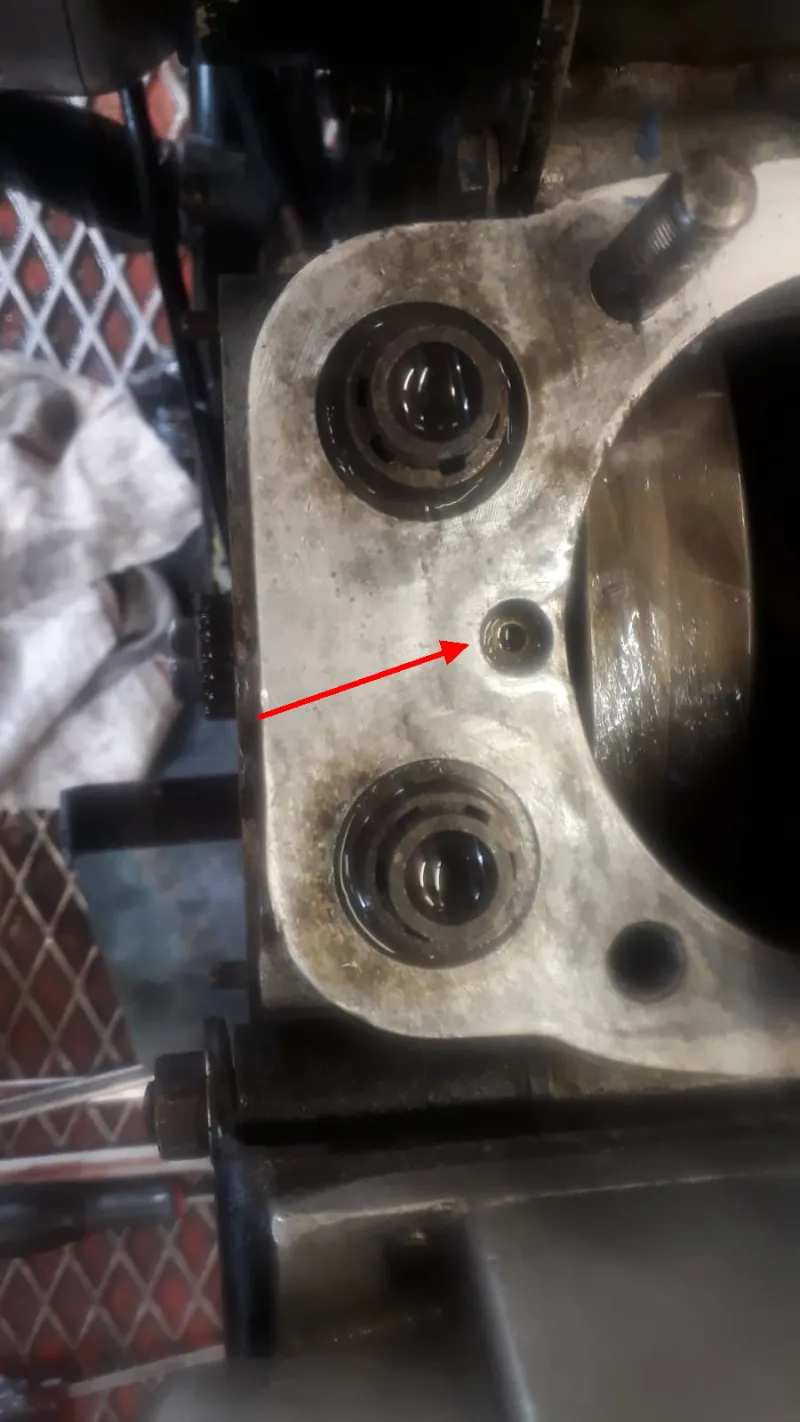
When you strip the top end, read the piston before you clean it. Aluminium transfer on the exhaust side of the skirt, a speckled crown and a dry-looking bore point to heat and lean running. A four-corner scuff pattern can mean clearance too tight; a single bright patch on the thrust face can be oil starvation or a distorted bore. If the plug is bone white, suspect air leaks or a blocked jet. If it is sooty but the piston is scored, look at cooling, timing and clearance. Don't just replace the piston and hope.
Measure clearance the right way
Bore clearance is not a feeling. Use a micrometer on the piston skirt at the specified height, at right angles to the gudgeon pin, and a bore gauge in the barrel at several heights. The difference is your clearance, usually quoted in thou. A cast piston in a British single might want somewhere around three to five thou, but the piston maker's sheet beats pub folklore every time. Measure at a steady 20C, because a cold garage in February and a warm workshop give different numbers. Check for barrel taper and ovality, and remember that torqueing the head can distort a tired barrel. If the bore is glazed or scored, a hone is not a cure for a worn piston.
Ring gap: the quiet culprit
Ring end gaps close up as the ring heats. Too tight, and the ends butt, the ring goes tight in the bore and the piston takes the blame. Check each ring square in the bore with a feeler gauge, ideally in the part of the barrel it will run in. Use the manufacturer's figure, or a sensible rule of thumb based on bore size, and file oversize rings square with a fine file, deburr the ends and check again. Don't forget ring side clearance in the groove; a sloppy groove causes ring flutter, and a tight one can seize the ring. A ring that has lost its tension or has a chipped chrome face is scrap.
Carburation and air leaks
Amal carburettors wear at the slide and needle jet, and a worn carb can be rich at idle and weak at speed. Check float height, fuel flow, tank cap vent and the condition of the inlet stub. A leak at the flange or a perished O-ring leans the mixture exactly where a single works hardest. Use the correct slide cutaway and needle position, and don't jet by ear alone. If you have changed the exhaust or air filter, expect to change jetting. A lean mixture raises piston temperature faster than most riders realise.
Timing and E10
Ignition timing that is too advanced hammers the piston and raises crown temperature. Check the points, the auto-advance mechanism and the strobe mark at the recommended rpm. E10 is now the default unleaded in the UK, and it brings its own habits: it absorbs water, can phase-separate in a laid-up tank, attacks some older fuel lines and leaves deposits in carburettor passages. It also leans the mixture slightly compared with E5, so a carb that was borderline before may be too weak now. Use super unleaded E5 where you can, drain the float bowl for winter, and replace old fuel hose with ethanol-resistant stuff. A fuel additive is not a substitute for correct jetting.
Oil, warm-up and the next rebuild
Make sure the oil pump is delivering and the return is scavenging. Use a classic 20/50 with decent zinc levels, change it hot, and clean the sludge trap. Warm the engine gently; a cold piston in a cold bore has less clearance than the numbers suggest. On the rebuild, fit the piston to the bore with the correct clearance, set the ring gaps, pressure-test the inlet, set the timing and start rich. Then run it in with varied load and short heat cycles. If it nips again, stop and diagnose; repeating the same build will repeat the same seizure.