Two Pots, One Rhythm: Weighing and Matching Pistons on a British Parallel Twin
There is a particular vibration that British parallel twins develop when one pot is doing slightly more than its share of the shaking. It comes up through the footrests, fizzes through the bars and makes the mirrors useless at about the same point the engine should be settling into its stride. Sometimes it is mounts, ignition or carburation. Sometimes it is simply that one piston assembly is heavier than the other.
Matching pistons is not black magic. It is housekeeping with a scale, a notebook and a bit of patience. The aim is not perfect mathematical equality; it is close enough that the engine behaves like a twin rather than two singles arguing through a common crankshaft.
Why the other piston matters
On a 360-degree British twin — the Triumph, BSA and Norton pattern most of us know — both pistons rise and fall together. If one assembly is heavier, the inertial load on that side is different from its neighbour. The crank does not care about your intentions; it just feels the difference. The result can be a rocking couple, a coarser feel through the frame and a engine that seems reluctant to smooth out at cruising revs.
On a 180-degree twin the effect is different again, but the principle stands: reciprocal mass wants to be even. You are not chasing horsepower here. You are chasing the calm, even thrum that makes a well-sorted parallel twin such a pleasant thing on a B-road.
What actually goes on the scale
Start with a clean bench and a digital kitchen scale that reads to 0.1 g. Check it with a known weight if you can — a clean 50 g calibration weight or, failing that, a couple of new fasteners whose mass you can verify elsewhere. Wipe the pan. Zero it with the container you will use, because a plastic tub or a paper cup is less fiddly than balancing a piston on the platter.
Weigh each side as a set, then break it down:
- bare piston, cleaned of carbon and old ring residue;
- gudgeon pin;
- complete ring set for that piston;
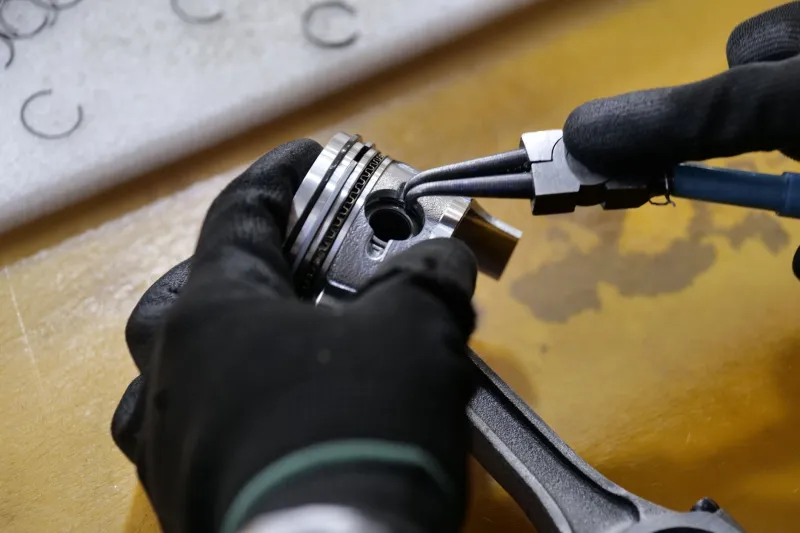
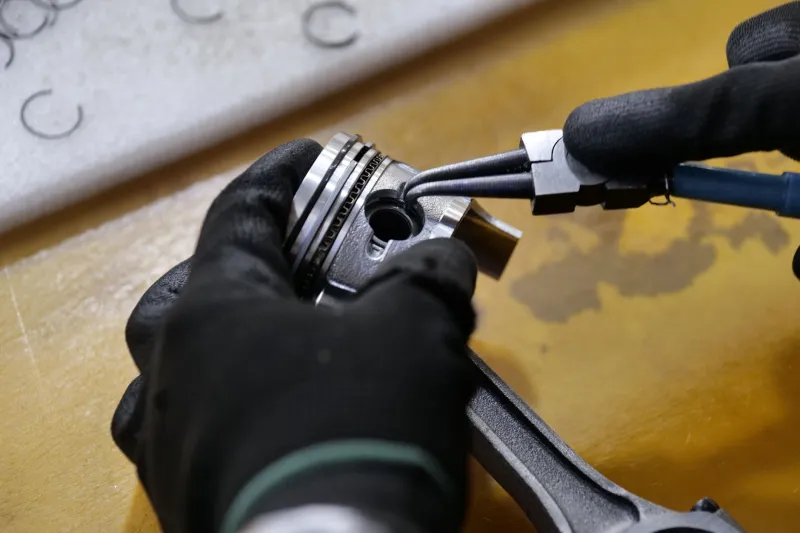
- circlips or wire retainers;
- any spacer or pin retaining arrangement peculiar to the model.
Write it down. Left and right, bare and complete. Do each weighing two or three times and note the spread. A piston that reads 1.2 g differently every time is telling you the scale or the bench is not stable, not that the casting is alive.
While the parts are off, check that the pistons are actually a pair. Same part number, same crown shape, same valve pockets, same skirt profile. A mismatched pair from an autojumble can weigh the same and still be wrong. Matching mass is the last check, not the first.
Sensible targets for a road-going classic
For a road bike, I aim for the complete piston, pin and ring assemblies to come within about 2 g of each other. A well-used pair at 3 g is acceptable if everything else is sound. Once you are staring at 5 g or more, stop and ask why. That is not a tweak; that is a mismatch.
Pins deserve their own look. A gram between pins is worth knowing about, and if one pin is noticeably heavier or has a different wall thickness, it may not belong in the same engine. Ring sets should be from the same maker and type. Do not mix a thick old top ring with a thin new one and expect the scale to sort out the difference in sealing and friction.
Do not chase tenths of a gram. You are building a 1960s road engine, not a Manx Norton. A sensible target and a clean, repeatable method will do more for smoothness than an obsession with the last 0.2 g.
The kitchen-table protocol
Strip the pistons, clean them properly and label everything. Left and right, front and back. Old carbon can hide a gram or two, and old oil can hide more. Use a soft brush and a solvent that will not attack the piston coating if there is one. Dry them thoroughly.
Weigh the bare pistons first. Then weigh the pins. Then the rings, preferably as complete sets. Build a simple table: bare piston, pin, rings, clips, total. If one side is heavy, find out where the difference lives before you reach for a file.
Check the pin fit at the same time. A pin that rocks or feels tight in the small end is a separate problem, but it affects the decision. A piston with a worn pin bore is not a good candidate for matching by weight alone.
Correcting small differences without ruining the pair
If the difference is a gram or two, there are safe moves. Swap pins if one is lighter and both are serviceable and correct for the model. Match ring packs more carefully. Remove casting flash from the underside of the piston only where it is clearly non-structural, and only with a light hand. Some pistons have balance pads or machined bosses intended for minor adjustment; use those if they exist.
Do not grind the skirt thrust faces. Do not thin the crown. Do not attack the pin bosses because the scale says so. A piston is a carefully stressed component, and the underside of a thin British single or twin piston is not a place for enthusiastic fettling. If the difference is more than a few grams, the right answer is another piston or a conversation with a machinist, not a session with the die grinder.
If you have a pair that is close but not perfect, fit the heavier assembly to the side that needs it — usually the side with the more heavily loaded conrod on a twin — and keep the lighter one opposite. It is a small thing, but it costs nothing and keeps the crank happier.
When to stop and when to road-test
Once the assemblies are within tolerance, build the top end as normal. Check ring end gaps, piston-to-bore clearance, pin fit and circlip seating. Do not let the weighing distract you from the basics. A beautifully matched pair with a tight ring gap will still nip up.
On the first road test, give the engine time to settle. If it still buzzes at cruising speed, look at the usual suspects: carburettor balance, ignition timing, engine mounts, exhaust mounts and the crank balance factor. Matching the pistons removes one variable. It does not excuse the rest of the rebuild.
But when a twin comes back smooth, with the mirrors clearing at 50 mph and the footrests merely tingling rather than dancing, you will know the scale earned its place on the bench. Two pots, one rhythm. That is the goal.