Decoding the Racket: A Garage Glossary of Piston Rattle, Slap and Pinking
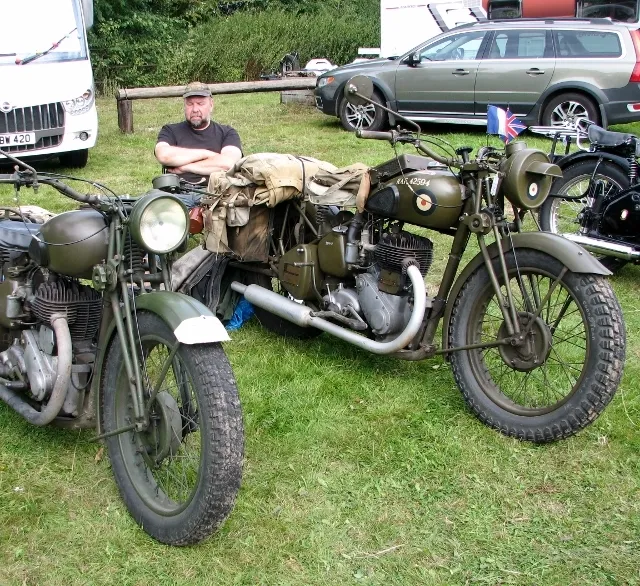
Photo: Evelyn Simak , CC BY-SA 2.0, via Wikimedia Commons
A well-sorted British single or twin has a voice you could pick out blindfolded in a crowded bike shed. A tired one has a whole vocabulary, and most of it comes from the top end. The trouble is that sound travels through cast iron and aluminium with very little regard for where it started, so a small-end rattle can seem to originate under your kneecap while a slack cam chain impersonates a big-end from three feet away. Before you reach for the spanners, spend an hour listening properly. It costs nothing and it frequently saves a barrel.
Establish the Rhythm First
Before naming a noise, note when it happens. Cold or hot? Idle, cruise, or on the overrun with the throttle shut? Does it appear only under load, only when you shut off, or does it follow engine speed regardless? Does pulling the clutch change it, which points at the primary chain or gearbox rather than the piston? On a twin, short out one cylinder at a time with the plug cap earthed well away from the fuel and see which side goes quiet.
A long screwdriver with the handle pressed to your ear, tip on the barrel base, then the head, then the crankcase, is still the finest stethoscope ever invented. Compare the two ends. If the noise is loudest halfway up the barrel, you are listening to piston or ring. If it is loudest down at the cases, think bottom end.
Cold Slap That Fades: Piston Slap Proper
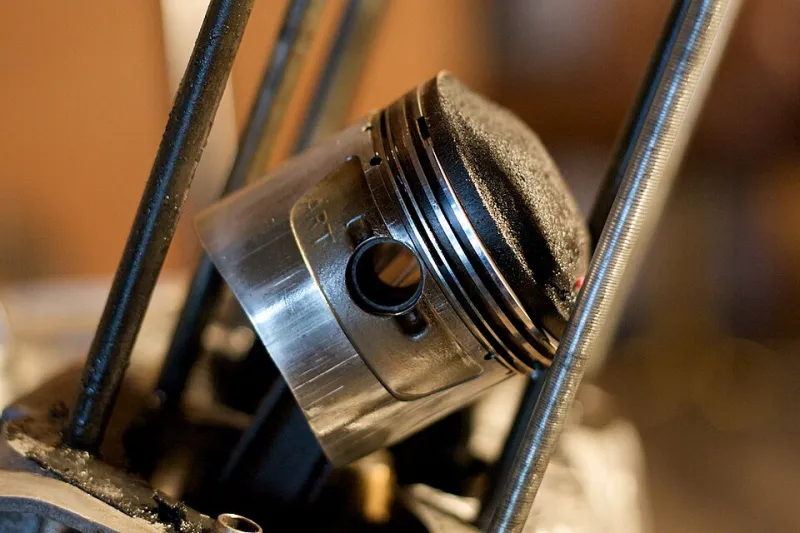
A dry, hollow rattle in the first thirty seconds from cold, fading as the barrel comes up to temperature, is classic piston slap. The piston rocks on its gudgeon pin as it reverses at top dead centre and the skirt slaps the thrust face of the bore. Forged pistons in air-cooled iron barrels do this from new and it is not a fault; they expand more than cast items and are set up loose on purpose.
What matters is how long it lasts and whether it survives a hot engine. If you can still hear it over the tappets after ten miles, measure before you assume. Use a bore gauge at the top, middle and bottom of the bore, in both the thrust plane and at ninety degrees to it, and a micrometer across the skirt at right angles to the gudgeon pin, roughly ten millimetres up from the bottom edge. Measuring across the pin axis will make a perfectly healthy cam-ground piston look scrap, because most skirts are oval by design.
Compare your figures with the workshop manual. Cast pistons commonly run around three to five thou clearance, forged ones nearer five to seven, but the book rules. Look for a barrel-shaped wear pattern down the skirt and vertical scuffing on the thrust faces; both suggest the piston has been rocking for a long time. That is your licence to strip.
The Tinny Rattle: Ring Flutter
Ring noise is lighter and drier than slap, often described as a tin-can rattle, and it tends to show up on a light throttle at moderate revs rather than under full load. It usually means the rings are moving about in grooves that have worn wider than they should, or that a ring is stuck with carbon, or that one has cracked.
Check three things. First, ring end gap: square the ring in the bore with the piston crown and measure the gap with feeler gauges. A rough guide is three to four thou per inch of bore, so a 70mm barrel wants roughly eight to eleven thou. Second, side clearance: slip a feeler between ring and groove land. More than a couple of thou of slop and the ring will flutter rather than seal. Third, drop the ring into the groove and rock it; a ring that clatters about is a ring that is not doing its job. Shiny witness marks on the lands and a sudden appetite for oil mist from the breather are the supporting evidence.
Pinking: The Sound of Too Much Enthusiasm Under Load
A dry, sharp tink from the top end as you roll on the throttle up a long drag in top gear, clearing the moment you back off or drop a cog, is pinking. It is detonation, and it is genuinely destructive if you ignore it — holed crowns and broken ring lands are the usual endgame.
Work through the causes in order. Ignition too far advanced is the commonest, especially on a bike whose timing was set by ear. A weak mixture, often from a tired Amal or a leaking manifold, raises combustion temperature nicely. Carbon build-up on the crown and in the combustion chamber raises compression and creates hot spots that glow. Modern E10 petrol is a real factor on high-compression engines that were designed for four-star; if the trouble started the year the fuel changed at your local filling station, that is your clue.
To confirm, retard the ignition a few degrees temporarily. If the tink disappears, it was pinking and not an exhaust blow or a loose tappet. Pull the plugs and look for peppering or tiny aluminium flecks on the insulator — that is piston material, and it means stop riding and start measuring.
Sharper Knocks: Small-End, Big-End and Crown Contact
A light, high-pitched double knock at idle that gets worse on a closed throttle is usually the small end, meaning wear between gudgeon pin and bush. A heavier, duller thud felt through the footrests, worse under load, is the big end and means the crank is coming out. A sharp tap that appears only when hot and worsens quickly may be the crown kissing the head or a valve pocket, often after a skim or a thicker gasket was fitted.
If a knock arrives hot and is followed by a tightening of the engine, stop immediately: you are hearing piston pickup, and the next stage is a nip-up.
When the Top End Is Genuinely Due
A noise on its own is not a diagnosis. Add the evidence: oil consumption, a wet and oily breather, low compression, a leak-down test that hisses into the cases, or a borescope showing vertical scores. Measure the bore before ordering anything, and price the job honestly — a rebore plus piston plus gaskets is not a small spend on a bike worth fifteen hundred pounds. Pattern pistons from Hepolite, AE and JP all need measuring before you trust the box, so budget for the machinist's time as well.
Listen, measure, then strip. In that order, every time.