Before the Barrel Comes Off: A November Piston Checklist for the Damp-Garage Rebuild
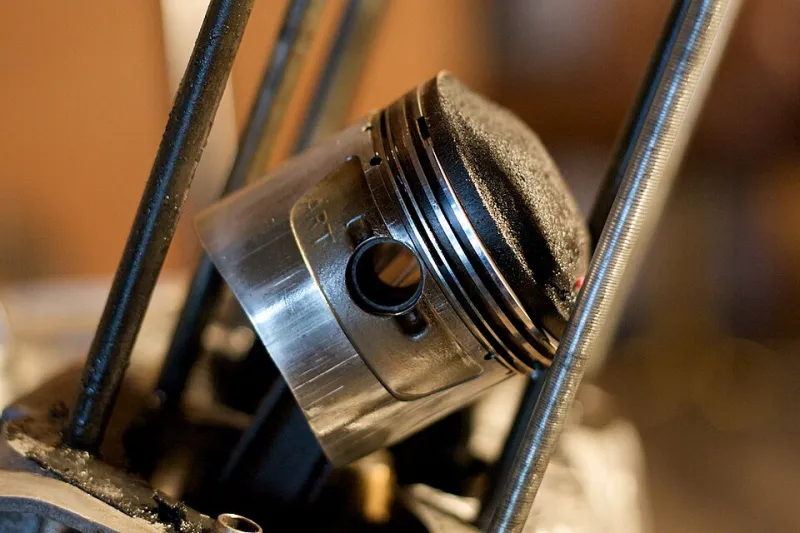
Photo: Honda CB77 Restoration, CC BY 2.0, via Wikimedia Commons
There is a particular smell to a garage in November: paraffin, cold steel, and the faint damp that gets into everything the moment the heater goes off. Winter rebuild season is here, and the temptation is to get the barrel off this weekend and have the whole thing back together by February. Resist, for one evening at least. An hour spent assessing the piston and bore before anything is dismantled and sent away will save you money, time, and at least one order of the wrong rings.
Set the Bench Before You Set the Spanners
Measurements are only worth taking if the conditions are repeatable. Bring the piston indoors or into a heated space and let it sit at a steady twenty degrees Celsius for a couple of hours before you put a micrometer anywhere near it. Cold alloy and cold steel read small, and a discrepancy of a thou will send you shopping for a rebore you did not need.
Check your micrometers against a standard, and your bore gauge against the micrometer. Photograph every stage of the strip-down as you go, and bag and tag fasteners by assembly. Nothing sinks a winter rebuild faster than a box of unidentified bolts in March.
Crown Condition: Read the Top of the Piston
Start at the top, because the crown tells the story of how the engine has been treated. Dry, soft, sooty carbon wipes off with paraffin and a rag. Wet, oily carbon on one side only points at a valve guide or a worn ring on that side. Hard, baked-on crust with a pale grey speckle around the edge is a different matter altogether, and it usually means the engine has been pinking.
Look closely at the crown edge above the top ring land. Chipped or eroded edges, a slightly melted appearance, or peppering across the crown all say detonation, and that is your cue to check ignition timing, mixture and compression before the rebuilt engine eats its new pistons for the same reason. Check the valve pockets for witness marks from valve contact, and measure crown height or deck clearance if the head has ever been skimmed. Clean with paraffin and a soft alloy scraper only. A wire wheel on a piston skirt is a quick way to turn a serviceable part into an ornament.
Ring Grooves: The Wear You Cannot See
Ring groove wear is the quiet thief of compression. With the rings out, slide a new ring into each groove and check the side clearance with a feeler gauge. Then rock the ring in the groove; any perceptible clatter means the land has worn and the ring will flutter rather than seal. Grooves taper as well as widen, so check the clearance at two points around the circumference.
If the lands are worn, re-machining is possible for some pistons but rarely makes financial sense on a standard British single when new pistons are available from JP, GPM or Hepolite patterns. While the rings are out, measure end gap in the bore with the ring squared up using the piston crown, and inspect each ring for cracks, blueing, and a bright, polished face where it should be dull.
Skirt Clearance and Bore Shape
Now the important measurement. Micrometer across the skirt at right angles to the gudgeon pin, about ten millimetres up from the bottom edge — not across the pin axis, or you will misread a cam-ground skirt as scrap. Compare with the manual figure, and note the difference between a cast piston and a forged one.
Then bore gauge the cylinder at top, middle and bottom in both planes. Record taper and ovality. A barrel that has worn a couple of thou out of round at the top of the ring travel is normal; one with heavy taper or a pronounced lip at the top of the bore wants a rebore. Run a finger around the bore looking for scores, and check the skirt for vertical scuffing and for collapse, where the thrust face has been hammered flat. A piston that has been slapping for a while will show a wide, polished, slightly dished patch on each thrust face.
Gudgeon Pin Feel
With the piston warm and clean, the gudgeon pin should slide through with light thumb pressure — firm, but not a press fit and definitely not a rattle. Check for blueing, scoring and fretting on the pin and in the small-end bush. A pin that rocks in the bush means the bush is for the bin. Circlip grooves deserve a look too; a pin that has been moving end to end has probably been touching a circlip it should not be touching.
Bore Glazing and Honing
A bright, mirror-polished bore with the original cross-hatch rubbed away is glazed. Rings will not bed into it. Break the glaze with a rigid hone or a Flex-Hone in a slow drill, aiming for a cross-hatch of around forty-five degrees and a proper plateau finish rather than deep scratches. If a rebore is on the cards, ask the machinist to hone with a torque plate if the barrel is a stressed one.
After honing, wash the bore with hot soapy water and a nylon brush until a white cloth comes out clean. Then oil it immediately. Honing grit left in the bore is a piston ring's worst enemy.
Storing Machined Parts in a Damp Garage
This is where winter rebuilds quietly fail. A freshly honed bore and a new piston sitting on a shelf in an unheated shed will have rust freckles on them by January.
- Never stand a piston on its crown or let two pistons knock together in a box.
- Coat bores, skirts and pins with clean engine oil or a protective spray, and re-coat every few weeks.
- Wrap pistons in VCI paper or lint-free cloth, not newspaper, which holds moisture against the metal.
- Keep rings in their packets, oiled, and label them by groove position.
- Store everything on a wooden shelf well above the concrete floor, inside a sealed tub with a sachet of silica gel.
- Run a dehumidifier or a low-wattage tube heater on a thermostat, and keep the shed door shut during temperature swings — condensation does more damage than steady cold.
Finally, book the machine shop now rather than in February. Reboring and crank work queues fill up quickly in the new year, and specialist piston lead times can stretch. Send the barrel and the new piston together, so the machinist can set the clearance to the actual part in his hand rather than the figure in the book.