Measure It Bolted: Why a British Barrel Tells the Truth Only Under Torque
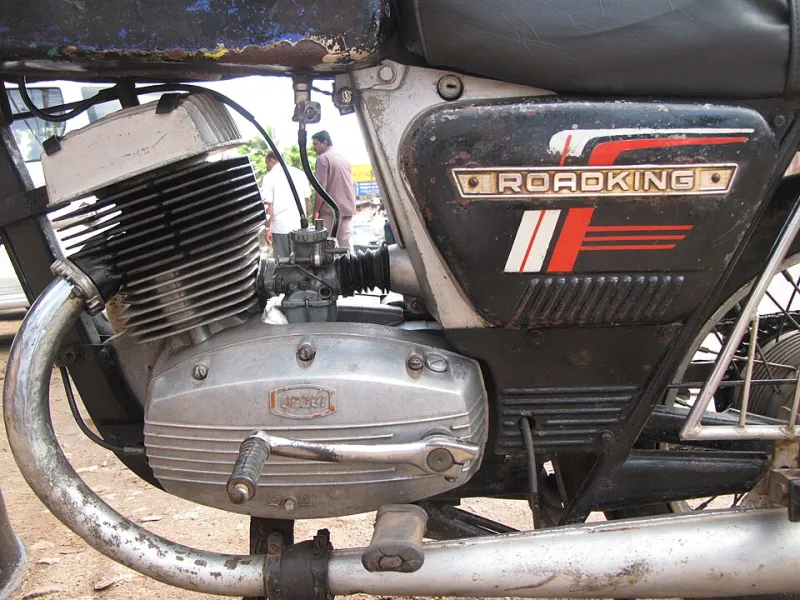
Photo: Etan Doronne, CC BY-SA 3.0, via Wikimedia Commons
There is a particular kind of disappointment that comes from measuring a barrel on the bench, ordering an oversize piston, and then finding the whole plot has shifted once the head goes back on. The bore looked tired but serviceable. The ovality was marginal. The taper was just about within what the manual would tolerate. Then the engine is assembled, torqued down, run hot, and the piston starts making a noise you did not budget for. The bench, unfortunately, had been lying.
The bench is not the engine
A bare British barrel is a relaxed casting. It is not being pulled about by a cylinder head, it is not being squeezed by base nuts, and it is not sitting at the temperature it sees after twenty miles of A-road work. On a typical air-cooled single or twin, the head studs pass through the barrel and clamp the whole stack together. That clamping load does something to the bore. It might be a whisper. It might be a thou or two. On a thin-walled alloy barrel with a pressed-in iron liner, or a well-used casting that has had a hard life, it can be enough to turn a borderline bore into a bad one.
This is not black magic. It is just elastic behaviour. The top flange of the barrel is pulled down by the head nuts, the base flange is held by its own fixings, and the metal in between has to accommodate both. Add the fact that many British barrels are not perfectly round when cold and unloaded, and you can see why measuring one in free air is only half the story.
What a torque plate actually does
A torque plate is a thick, flat piece of steel or aluminium drilled to match the head bolt pattern. You bolt it to the top of the barrel and torque the studs or bolts to the figure in the workshop manual. The plate stands in for the cylinder head. It does not have to be a cylinder head, and in some ways it is better that it is not: a dedicated plate is flat, stiff and has a big hole in the middle so you can get a bore gauge into the cylinder.
On a single, the plate is usually a simple rectangular or round slab with one large opening and the stud holes around it. On a twin, the plate covers both bores and the full head pattern. The important details are stiffness and height. The plate needs to be thick enough not to flex, and the bolt holes need to sit at the same effective height as the head so the studs are loaded in the same way. If the head has deep recesses for the nuts, you may need spacers or tubes to replicate that. If you simply bolt a thin plate straight onto the flange, you are measuring a different engine.
A home-shop check you can actually do
Start with a clean barrel. Degrease the bore, wipe it dry and let it settle to workshop temperature. If your shed is freezing in November, bring the barrel into the house for a few hours first. Aluminium and iron do not expand at the same rate, and a bore gauge does not care about your fingers being cold.
Zero your bore gauge against a micrometer at the same temperature, then measure the unbolted barrel at three heights: just below the top ring travel, the middle of the bore, and just above the base flange. Do it on two axes, front-to-back and side-to-side. Write the numbers down. Then fit the torque plate, using the correct washers and lubricant, and torque in the manual's sequence and stages. Let it sit for ten minutes. Measure again, in the same places and on the same axes.
Now compare. If the bolted numbers are the same as the free-air numbers, treat yourself to a biscuit. If they differ by half a thou, make a note. If they differ by a thou or more, you have learned something important before spending money on a rebore. The barrel is telling you what it does when it is working, not what it does when it is resting.
The traps that catch good spanner hands
The first trap is measuring at the top ridge and calling it wear. The ridge is carbon and untouched metal, not a true bore diameter. The second is using a worn old cylinder head as a torque plate without checking it for flatness. A warped head will pull the barrel into a warped shape, and you will chase a ghost. The third is over-torquing the plate because it feels more scientific. Use the manual figure, not your best guess with a long breaker bar.
Another common mistake is supporting the barrel in a vice while measuring. The base flange is part of the load path. Sit it on a clean flat surface, ideally a surface plate or a thick piece of glass, and let it settle. And do not measure only one axis. A bore can be round in one direction and oval in the other. If you only check front-to-back, you may miss the very distortion you are looking for.
Finally, remember that a torque plate reveals a problem; it does not fix one. If the bore is worn, tapered or scored, bolting it down will not turn it into a good cylinder. It just gives you an honest starting point for the machining decision.
Borrowing or making one in the UK
The club network is your friend here. The Vintage Motorcycle Club, the BSA Owners Club, the Triumph Owners Motor Cycle Club and the Norton Owners Club all have members who have made or bought torque plates for common engines. Ask on the forum. Someone two counties away will have one for a Gold Star, a 5T or a Domiracer and will be happy to lend it for the price of postage and a promise to return it clean.
Local machine shops are the other obvious port of call. Many have plates for the engines they see regularly, and some will loan them with a deposit or let you bring the barrel in and measure it bolted on their bench. If you fancy making your own, a 12mm or 15mm steel plate drilled to the head pattern is not beyond a competent shed. Laser-cut blanks are cheap enough now, and a plate costs far less than a wrong rebore. Just make sure the plate is flat, the holes are deburred, and the effective height matches the head.
Tell the machinist what you measured
When you hand the barrel over for a rebore or hone, take your numbers with you. Tell them the torque figure, whether you used a gasket or a spacer, and what the bore did when it was bolted down. Ask if they will hone with a torque plate fitted. Not every shop will, and some will have a sensible reason why not for your particular engine, but it is a conversation worth having. A machinist who understands that the barrel moves under load is a machinist worth keeping.
The barrel on the bench is a relaxed thing. The barrel in the engine is a stressed thing. If you want to know which one you are rebuilding, bolt it down first.