The Gap You Can't Guess: Ring End Clearance on a Cold-Bench British Single
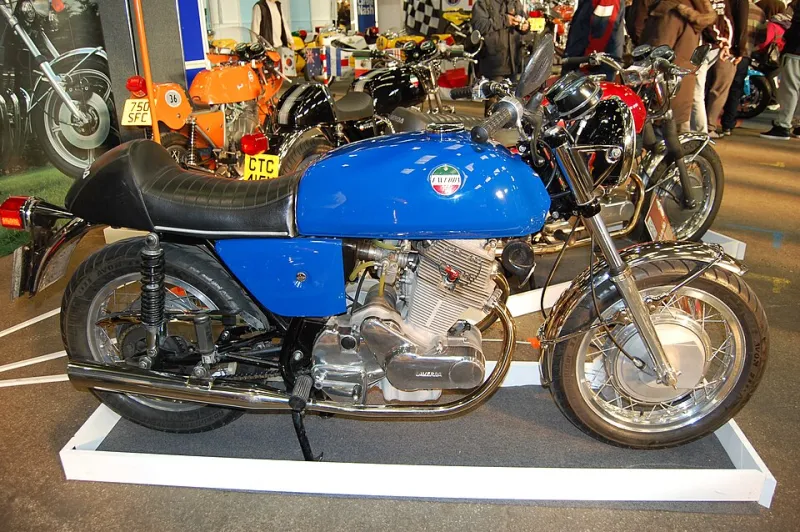
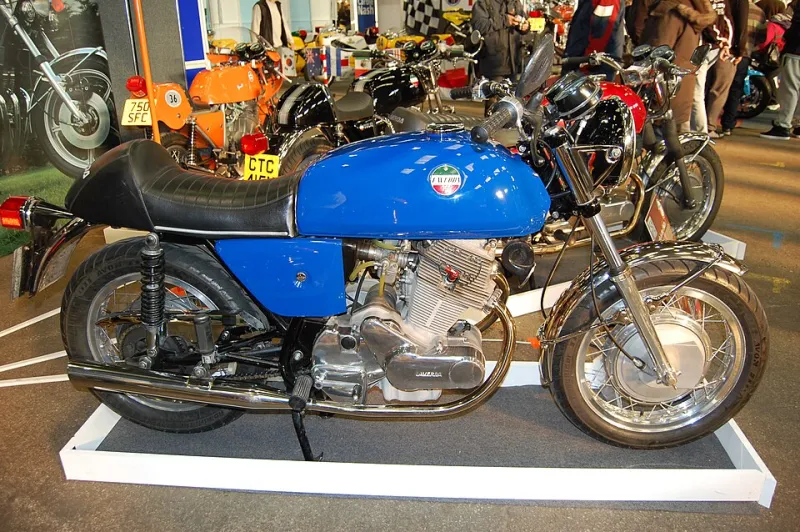
Photo: Ronald Saunders from Warrington, UK, CC BY-SA 2.0, via Wikimedia Commons
There is a particular kind of optimism that lives in an unheated garage in November. It says the ring will be fine, the gap will be close enough, and the feeler gauge can stay in the drawer. That optimism usually ends with a nipped-up piston, a scored barrel and a conversation that begins, “I thought I’d leave it a bit tight.”
Ring end clearance is not a suggestion. It is the space that stops the ring ends butting together when the piston gets hot, and on an air-cooled British single, heat is not a rumour. It arrives quickly, it varies across the barrel, and it does not care that you were in a hurry on a Sunday afternoon.
Why a thou is not a rounding error
A thou — one thousandth of an inch — sounds like nothing. In a vintage engine it is the difference between a ring that seals and a ring that breaks. Set the gap too tight and the ends meet as the ring expands; the ring has nowhere to go but outwards, and it either scuffs the bore or cracks. Set it too wide and you lose tension, get blow-by, and wonder why the breather is doing an impression of a kettle.
The correct figure is the one in the workshop manual for your model. Where that is missing or unclear, the old rule of thumb for an air-cooled four-stroke is around four thou of end gap per inch of bore for the top ring. On a 3-inch bore that is roughly twelve thou. The second ring often wants a touch more, and the oil ring rails have their own minimum. None of this overrides the manufacturer’s figure, but it gives you a sanity check when the parts book has gone quiet.
What you should not do is assume the ring is right out of the box. Pattern rings and old-stock rings can arrive with gaps that are tight for a freshly rebored barrel, and a rebore changes the bore size, not the ring’s willingness to fit it.
Measure it where it lives
The only useful measurement is taken with the ring square in the actual barrel, at the depth it will run. Not on the bench, not in a plastic bag, and not by eye.
Wipe the bore clean. Slide the ring down using the piston crown upside down — a wooden dowel works too, but the piston keeps it square. Push it to just below the top of ring travel, which is below the unworn lip at the very top of the bore. Do not measure in that lip; it is smaller than the working bore and will flatter your gap.
Then use a clean feeler gauge. The blade should slide with a light drag, not be forced and not rattle. If you have to shove it, the gap is smaller than the blade. If it drops through, go up a size. Record the figure. Then check the same ring at mid-stroke and near the bottom of its travel.
This is where a worn British barrel tells on itself. If the gap is noticeably tighter at the bottom than at the top, the bore is tapered, and the ring is at risk of butting lower down the stroke. A variation of more than three or four thou across the ring’s travel is a warning to stop and assess the bore, not a cue to file the ring to suit the tightest spot and hope.
The cold-shed problem
A garage at five degrees Celsius is not a laboratory, and that is fine as long as you are consistent. Let the barrel, piston and rings sit in the same space for a few hours before measuring. Do not measure a freezing ring in a warm barrel, or a barrel that has just come in from the cold and is still settling. The numbers drift a little with temperature, and the last thing you need is to set a gap based on a part that was still warming up.
UK winters also mean damp. A ring that has been sitting in a shed will have a fine film on it before you start. Clean it, dry it, and keep your feeler gauges clean. Grit in the gap is a tiny grinding compound with ambitions.
Reading the bore through the gap
The end gap is a cheap bore gauge if you use it properly. Check the ring at the top of its travel, halfway down and near the bottom. If the gap grows dramatically towards the top, the bore is worn at the top, which is normal on an old single but may still mean a rebore. If it tightens at the bottom, the barrel is tapered. If it varies around the circumference, the bore is oval. Any of these findings should send you back to the bore measurements before you touch a file.
Also check ring side clearance in the groove while you are there. A ring with a healthy end gap but a worn groove will flutter and pump oil, and no amount of careful filing will fix that.
Filing without ruining it
The ideal tool is a proper ring filer, which holds the ring square and removes material evenly. If you are using a fine file in a vice, slow down. Clamp the ring so the end is supported and file square across the end, not at an angle. File the end face only; do not touch the outside face or put a chamfer on the sealing surface. Work in small increments — two or three strokes, then deburr the end with a fine stone, refit the ring in the bore and measure again. Repeat until you reach the target.
Keep the ring flat and the ends parallel. A ring with a slanted end gap is a ring with a variable gap, and a variable gap is a guess. When you are done, mark each ring to its cylinder and its position, and keep them that way through final assembly.
A cold-bench sequence that works
- Clean the bore and the ring. Let everything settle to the same temperature.
- Square the ring in the bore below the unworn lip and measure with a light-drag feeler gauge.
- Repeat at mid-stroke and near the bottom of travel. Note any taper or ovality.
- Compare the smallest reading with the manual figure or the four-thou-per-inch starting point.
- If it is tight, file in small increments, deburr, and re-check in the bore. If it is already wider than the maximum, do not “make do” — find out why.
- Record the final gaps and keep the rings matched to their bores.
The twelve-thou truth is not a magic number; it is a discipline. Measure in the barrel, measure cold and clean, and file with the patience of someone who has already priced a replacement piston. The gap you cannot guess is the one that keeps the engine together.