Skirts, Crowns and Slippery Compromises: Coating Choices for a 1950s British Single
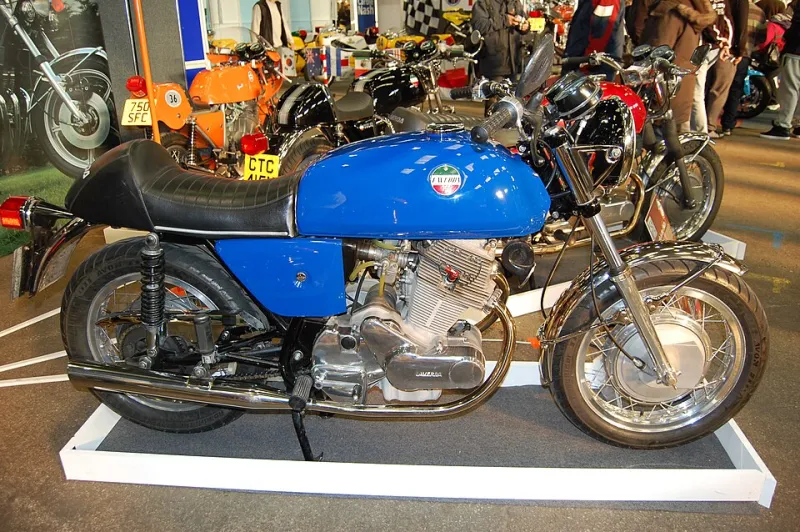
Photo: Ronald Saunders from Warrington, UK, CC BY-SA 2.0, via Wikimedia Commons
There is a particular moment in a British single rebuild when the new piston arrives, gleaming in its box, and the old Hepolite sits on the bench looking like a relic from a different century. The temptation is to send the new one straight off for every coating in the catalogue. Skirt film, crown barrier, dry-film lubricant, maybe a little something on the ring grooves. It feels like progress. It also feels expensive. And on a 1950s BSA, Triumph, Norton or Matchless, it can be the point where a sensible engine rebuild turns into an experiment.
Coatings are not snake oil. They are also not a substitute for measuring the bore, setting the clearance and fitting the right rings. In 2026, UK coating houses are more accessible than ever, and classic owners can buy piston treatments that would once have been reserved for racing. The question is not whether modern coatings work. It is whether they suit your engine, your riding and your appetite for risk.
What the coatings are actually doing
A skirt coating is usually a dry-film lubricant — molybdenum disulphide, tungsten disulphide, graphite or a proprietary resin-bound mix. It sits on the thrust faces of the piston and gives a little slip during cold starts and marginal lubrication. On a vintage single that spends half its life being started in a damp shed and the other half being ridden in stop-start traffic, that is not a mad idea. The film is thin, often measured in microns, and it is sacrificial. It will wear. It is there to reduce scuffing while the oil is still finding its way around.
A thermal-barrier crown coating is a different animal. A ceramic or ceramic-like layer on the piston crown reduces heat transfer into the piston body. In theory, that lets the crown run cooler or keeps more heat in the combustion chamber. In practice, it changes the thermal map of the piston. On an old air-cooled single with a modest compression ratio, that may be harmless or even helpful. On a tuned engine with a thin crown, weak mixture or ambitious ignition timing, it can contribute to detonation and overheating if the rest of the build is not up to it. Coatings do not create tolerance. They expose it.
The originality argument is quieter than you think
There is a strong originality crowd in the UK, and rightly so. Matching numbers, original finishes and period-correct components all have value. But a piston coating is invisible once the barrel is on. It does not alter the outside of the engine, and it does not stop you keeping the original piston on the shelf as a pattern. The real originality issue is not cosmetic. It is irreversible preparation. If a coating shop blasts the piston to key the surface, it can round off ring lands, dull stampings and hide cracks under a fresh grey finish. That is where a clever upgrade can become a costly mistake.
My own view is simple: if the original piston is serviceable and the bore is within limits, leave it alone. If you are fitting a new piston as part of a rebore, a skirt coating is a reasonable belt-and-braces measure. A crown barrier is a more specialised choice. It belongs on a known hot-running engine or a competition build where someone has already done the thermal homework, not on a roadgoing single because it sounded impressive on a forum thread.
The UK supplier route
There are several established coating specialists in the UK who deal with classic and motorsport pistons. The names that come up in garage conversation include Camcoat, Poeton and Zircotec, among others. The important thing is not the badge on the invoice. It is whether the shop understands old pistons. Ask what they will mask, how they will clean the component, what cure temperature they use and whether they have done a 1950s British single before. A good coating house will ask you about piston-to-bore clearance, ring type and intended use. A bad one will simply quote a price per piston and tell you to send it in.
Be wary of coatings applied to worn pistons to take up clearance. A dry-film skirt coating is not an oversize piston. It will not correct a collapsed skirt, a worn ring land or an oval bore. It may last long enough to get you to the next autojumble, but it is not a rebuild. Similarly, do not coat a piston that has visible cracks, heavy scoring or ring lands that have been attacked by detonation. You are simply putting a smart suit on a problem.
Application pitfalls that catch first-timers
Masking is the first trap. Gudgeon pin bores, ring grooves, valve pockets and crown edges all need protection. Coating in a ring groove can pinch a ring and cause a seizure. Coating on a gudgeon pin bore can alter the fit. Coating on a crown edge can interfere with valve clearance or create a stress riser. A competent shop knows this, but it is worth confirming before the work starts.
Cure temperature is the second. Some coatings are oven-cured at temperatures that are harmless to a forged piston but less kind to certain cast or heat-treated items. Ask the question. If nobody can tell you the cure schedule, walk away.
Thickness is the third. A skirt coating may be only ten to twenty microns per side, but that still matters when you are setting clearance. Measure the piston before and after coating, and do not assume the bore clearance is unchanged. The piston should still be measured at the correct height on the skirt, at right angles to the gudgeon pin. A coating is not a reason to skip the bore gauge.
Finally, break-in. A coated piston still needs sensible running-in. Avoid prolonged idling in a cold shed, vary the load, and give the rings a chance to bed. UK winter condensation is not a friend to a freshly rebuilt engine. Warm it properly, ride it properly, and change the oil after the first few hundred miles.
The sensible spec for a roadgoing single
For a typical 1950s British single used on the road, I would keep it simple. A quality new piston, a correct rebore, a decent skirt dry-film coating and properly gapped rings will do more for reliability than a fancy crown treatment. If the engine is mildly tuned and has a history of running hot, a thermal barrier might be worth discussing with someone who knows the specific model. If it is a standard road bike, spend the money on a good valve job and a carburettor rebuild instead.
The romantic view is that modern coatings connect vintage engineering to current technology. The garage view is that they are tools, not talismans. Use them where they solve a known problem, measure everything twice, and keep the original piston in the biscuit tin. That way, if the experiment does not work out, you still have something to compare it to.