Ratios Are Not Horsepower: Why a 1960s Twin Rarely Thanks You for a High-Comp Piston
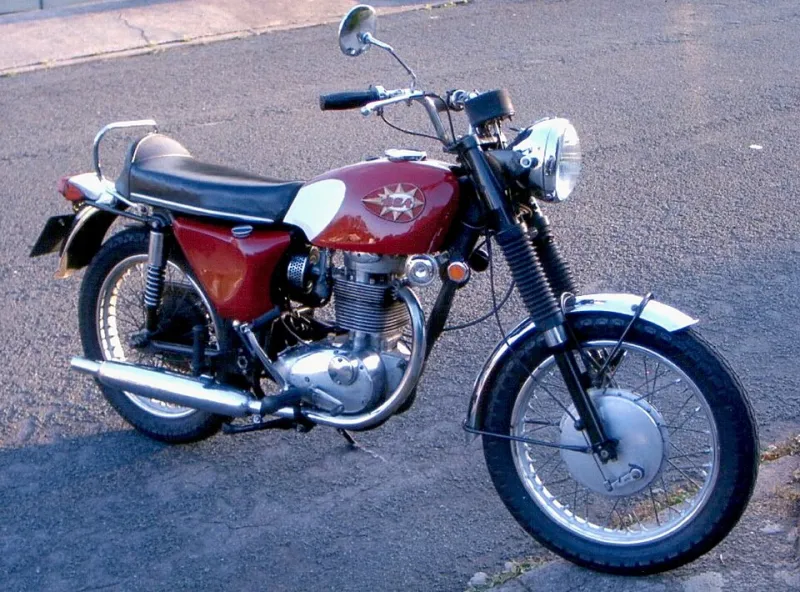
Photo: TR001, CC BY-SA 3.0, via Wikimedia Commons
There is a tempting logic to high-compression pistons. More compression means more pressure, more pressure means more push, and more push means more fun. On a 1960s British twin, that logic often runs straight into a brick wall made of pinking, heat and starter grief. The engine that felt smooth and flexible on a modest ratio can become a sharp, fussy thing that demands expensive fuel and constant timing tweaks. Sometimes the fastest bike across a Welsh A-road is not the one with the biggest number in the specification column.
The catalogue number is not a promise
A piston advertised as 9.5:1 or 10:1 is not a guarantee that your engine will make that ratio. The actual figure depends on chamber volume, deck height, gasket thickness, valve pockets and whether the head has been skimmed. It also depends on the barrel and crank you happen to have. Two supposedly identical twins can end up with different real ratios once the parts are bolted together. If you are chasing a number, measure the chamber and do the arithmetic. If you are chasing a ride, be less romantic about the number.
British twins of the 1960s were often happiest around 8.5:1 to 9.0:1 in road trim. That was not because designers lacked ambition. It was because they understood fuel, cooling, starting and the way real riders used the throttle. A modest ratio with a good chamber shape and correct timing can feel stronger and cleaner than a high ratio that has been detuned to survive. The second engine may have a higher paper figure and a narrower useful rev range.
What UK pumps actually deliver
In 2026, the standard UK forecourt fuel is 95 RON, usually with ethanol in the mix. Super unleaded is typically 97 to 99 RON, and it costs more. A high-compression 1960s twin may run happily on super, but that becomes a permanent tax on every ride. Worse, the bike may still pink when hot, loaded or climbing, because octane rating is only one part of the puzzle. Ethanol blends can also affect older fuel systems, especially if the machine sits for weeks between runs.
A standard 95 RON fill is not a sin. Many British twins were built for fuel that was not dramatically better than what we have now, and they cope well when the compression is sensible and the ignition is right. The trouble starts when a owner adds compression, keeps the original advance curve and expects modern fuel to cover the difference. It usually does not. The engine either pinks, or it is retarded so far that it loses the snap that made the swap seem worthwhile.
Chamber shape and squish
Compression is not just a ratio. It is a shape. A domed high-compression piston can shroud the flame front, increase surface area and create hot spots. A chamber with a decent squish band can improve mixture motion and resist detonation, but only if the clearance is right. Too much squish clearance and the band does little. Too little and the piston can kiss the head when the rods stretch or the bearings wear. More squish is not automatically more fun. It is a geometry problem, and it has to work with the chamber rather than against it.
This is where many home rebuilds go wrong. A piston is chosen for its crown height, the head is skimmed for freshness, and nobody checks the assembled squish. The result may run, but it may also rattle, run hot or need timing pulled back to survive. A clean, well-shaped chamber at a modest ratio often behaves better than a high-domed piston squeezed under a head that was never designed for it. The engine does not care about the brochure. It cares about flame travel, mixture and heat.
Timing cannot paper over ratio
Retarding the ignition is the classic rescue for a pinking engine. It can work, but it is a bandage. Retarded timing sends more heat down the exhaust, reduces efficiency and can make the engine feel flat. It may also cook valves and exhaust ports if the owner keeps leaning on it. If the only way to stop detonation is to pull the timing back to a point where the bike is unpleasant, the compression is wrong for the fuel and the riding.
A proper advance curve matters as much as the maximum figure. Worn automatic advance units, stiff springs and ham-fisted static timing can all make a modest engine behave badly. Before blaming the compression ratio, check that the timing is actually doing what you think. Then check the carburetion. A weak mixture can cause pinking just as surely as too much compression, and it is easier to fix.
Starter grief and knees
High compression also changes the starting ritual. On a kickstart twin, it means a harder swing, more chance of kickback and a greater appetite for good technique. On a bike with electric start, it means more load on the motor, the battery and the sprag clutch or starter drive. A tired battery that was adequate before may now struggle, and a starter that was marginal may become a consumable. The owner who wanted a little more urge may end up with a bike that is harder to live with every morning.
This is not an argument against ever raising compression. It is an argument against doing it casually. If the head, chamber, fuel system, ignition and starting system are all considered together, a modest increase can work. If the piston is the only part that changes, the rest of the engine will soon send the bill.
The invoice after the invoice
The real cost of chasing a number is not just the piston. It is the super unleaded, the repeated timing checks, the hotter running, the gaskets, the detonation damage that may not show until a valve seat or piston crown gives up. It is the trial-and-error that eats a riding season. A well-sorted 8.5:1 twin with good carburetion and correct timing is often faster, smoother and more enjoyable than a 10:1 twin that has been retarded into submission.
So before you order the high-compression piston, ask what you actually want. If you are building a race engine with a known chamber, proper fuel and a dyno, chase the number. If you are building a road bike that will sit in traffic, tour on A-roads and fill up at a normal pump, be honest about the trade. Compression is a tool, not a trophy. The best ratio is the one that lets the engine do its work without complaining.