Small-End Detective Work: Deciding If a Gudgeon Pin Deserves a Second Life
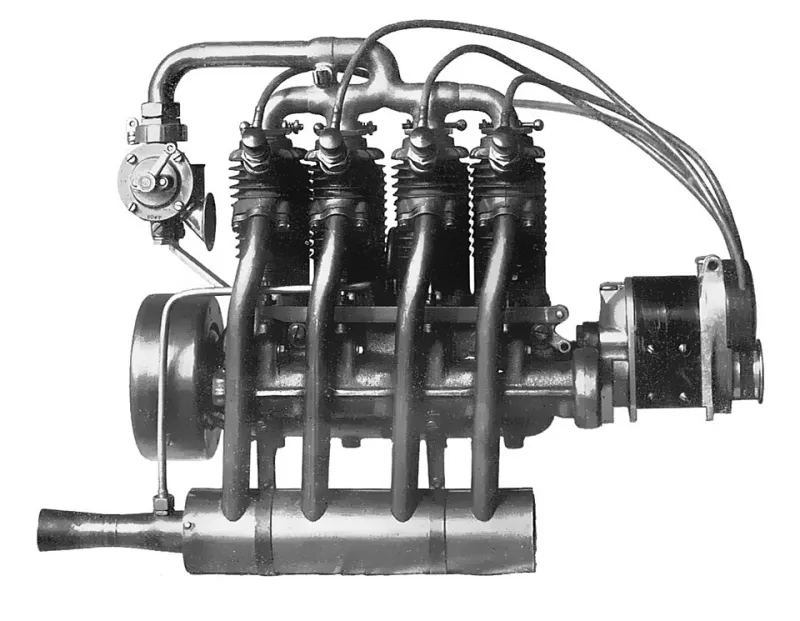
Photo: Rankin Kennedy C.E., Public domain, via Wikimedia Commons
On a damp November bench, with the barrel off and the piston sitting on a clean rag, the gudgeon pin is easy to dismiss. It is a small steel cylinder, often still gleaming, and it has done nothing obviously dramatic. That is exactly why it deserves a proper inspection. In a British single—B40, Tiger Cub, ES2, Bullet, MAC—the pin and its small-end bush live in a hard place: reversing loads, poor oil supply at kickover, and decades of previous owners with hammers. A pin that looks fit can be oval by half a thou, and half a thou is enough to start a fresh top-end on the road to rattle.
Know which fit you are dealing with
Before you measure anything, work out the original arrangement. Some pins are clamped in the conrod and free in the piston; some float in both and are retained by circlips; some are a light interference fit in the piston and must be pressed or warmed out. The workshop manual for your model is the authority, not a forum thread from 2007. Reassembly clearances differ, and a pin that is correct for a floating installation is wrong for a clamped one. Check the rod eye for a pinch bolt or clamp, look at the piston for circlip grooves, and note whether the old pin came out with a fight.
Surface clues before the micrometers
Wipe the pin dry and look at it under a bright lamp. A healthy pin has an even, fine finish with no distinct bands. Trouble shows up as a polished stripe where the bush has been rocking, a ridge you can catch with a fingernail at the bush edges, or a bluish tint from heat. Pitting and rust speckling matter too: a pin that has sat in a damp shed for twenty years may clean up shiny but still be pitted below the surface. Examine the circlip grooves with a magnifier. Rounded grooves, cracks or a groove that has worn wider will let a circlip walk out, and that is an engine-destroying failure. If the pin is a press fit in the rod, inspect the rod eye for fretting and cracks.
Measuring the pin and the bush
Use a micrometer with a friction thimble or ratchet, zero it, and measure each end and the middle in two planes at 90 degrees. Write the numbers down. You are looking for taper, ovality and overall diameter loss. A pin that varies by more than the manual’s wear limit—or by more than about a thou on a pin with no published limit—is scrap. Do not be tempted to polish it smaller to make it fit a worn bush; pins are often case-hardened, and polishing through the hard skin is a shortcut to rapid wear.
The bush is the other half of the pair. Measure its bore with a small-bore gauge or a telescopic gauge and micrometer, again in two planes and at both ends. A set of pin gauges is handy for a quick check of roundness, but the final figure needs a proper bore measurement. A new bush can be oval after pressing, and an old bush often wears into a barrel shape. Subtract pin diameter from bush bore to get the running clearance. The book figure for many British singles is around half a thou to a thou and a half, but do not guess: use the manual. If the bush is worn or out of round, replace it and ream or hone to the actual pin you intend to use—not to a nominal size.
The mistakes that bite
The classic error is fitting a new piston and rings to a worn pin and bush because the pin ‘looked all right’. Another is buying a new pin and dropping it into the old bush. The two are a matched pair in service, and one worn half will quickly wear the other. Reusing circlips is false economy; they are cheap and they are not designed to be unloaded and reloaded. Over-reaming a small-end bush to get a ‘nice free fit’ is another garage tradition that ends in a knock. Finally, check the rod for alignment and the small end for cracks before you press in a new bush. A tight or misaligned bush can seize a pin and crack the piston.
Why a little play is a big deal
At running temperature, a small clearance becomes a hammer. The pin rocks in the bush, the piston rocks on the pin, and the ring lands take the side load. A fresh bore and new rings can bed in beautifully and still smoke or rattle because the pin is dancing. In bad cases the pin frets the piston bosses, wears the circlip grooves and sends hard steel into the bore. The noise often sounds like tappet clatter or pinking, so owners chase the ignition and carburettor while the real wear is in the little end. By the time it is obvious, the piston may be scrap.
Refitting with a clear conscience
Clean everything, fit a new bush if there is any doubt, and measure again after reaming. Use new circlips, fit them with the correct pliers and check they seat fully. Oil the pin and bush with engine oil. For a floating installation it should slide through by hand; for an interference fit, warm the piston or rod as the manual says. If it needs a hammer, something is wrong. Check the piston rocks freely on the rod without vertical play. Turn the engine over slowly by hand before you add fuel. After the first fifty miles, listen for a light double-knock on a closed throttle. If it is there, stop and investigate. A gudgeon pin is cheap; a repeated top-end build is not.